
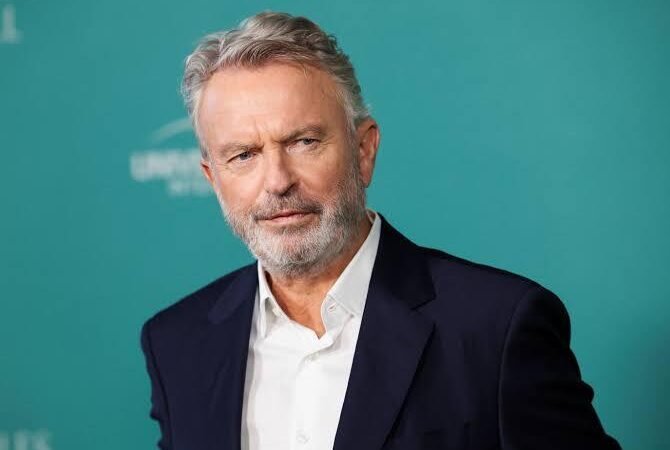
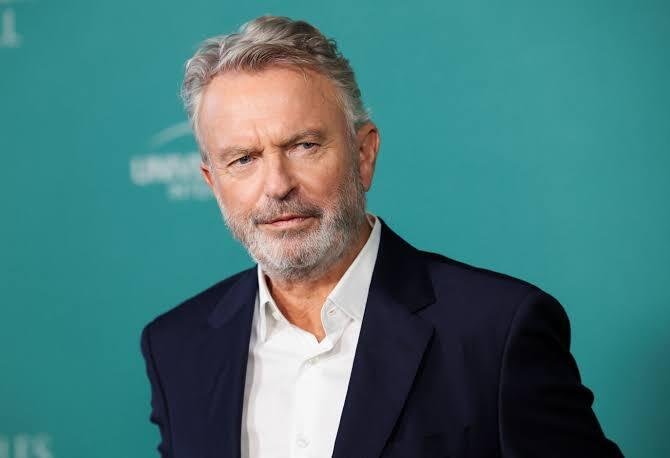
Sam Neill, Star of ‘Jurassic Park,’ Has Died at 78 — Just Months After Announcing He Was Cancer Free
There’s a particular kind of heartbreak that comes with losing someone who had just told the world he’d won. Sam Neill, the actor whose steady gaze and calm authority made Dr. Alan Grant one of the most beloved characters in movie history, died Monday in Sydney, Australia. He was 78 years old. And the cruelest twist of all: he was cancer free when it happened.
His family shared the news in a statement posted to his Instagram page, using the Māori word “whānau” to describe the extended community of people who loved him. They said the loss was sudden and unexpected, but that it came with one small mercy — Neill had not been fighting cancer at the time of his death. He passed at St Vincent’s Private Hospital, surrounded by family, in a manner his loved ones described as carrying the same dignity that had defined his entire life.
For anyone who grew up watching him crouch beside a Triceratops or stare down a Tyrannosaurus rex with nothing but awe and terror on his face, the news landed like the loss of an old friend.
A Career That Spanned Five Decades — and Refused to Be Boxed In
Neill’s career was never just about dinosaurs, though “Jurassic Park” made him a household name across the globe. Over five decades, he built one of the more quietly remarkable filmographies in modern cinema, moving effortlessly between prestige drama and blockbuster spectacle. He starred in the Oscar-winning “The Piano,” charmed audiences in the submarine thriller “Dead Calm,” and later found a whole new generation of fans playing the sharp-tongued Chief Inspector Campbell in “Peaky Blinders.”
He wasn’t supposed to be a movie star at all, by his own account. He once told CNN, on the 30th anniversary of “Jurassic Park,” that he’d had a genuinely joyful and unexpected life — that acting wasn’t something he’d ever planned on, but somehow it happened anyway, and nobody was more surprised by that than he was.
That mix of humility and dry wit followed him everywhere. When he accepted the Screen Legend Award at the 2025 New Zealand Screen Awards, he brushed off the honor with a joke about simply having stuck around long enough to qualify.
Tributes poured in within hours of the announcement. Laura Dern, his “Jurassic Park” co-star and longtime friend, called him a true gentleman and said she would love him forever as Dr. Alan Grant. Fellow New Zealander Karl Urban described him as a trailblazer and a national treasure who gave endlessly to both his home country and the world.
From Northern Ireland to a New Zealand Farm
Born in Northern Ireland, Neill moved to New Zealand’s South Island at age seven, and the country became the true anchor of his life. He was knighted by New Zealand in 2022 and had earlier received the Officer of the Order of the British Empire in 1991 — but ask anyone who knew him, and they’ll tell you his real pride was his farm.
Neill was famous for naming his farm animals after his Hollywood friends, turning his social media accounts into an unlikely comedic goldmine. He once joked to an interviewer that naming animals after people he loved didn’t always end well, recalling with dark humor that a chicken named after Meryl Streep had met an untimely end courtesy of a ferret.
That same land in Central Otago inspired one of his proudest achievements outside acting: Two Paddocks, the organic winery he founded in 1993 with a simple goal — to make a pinot noir good enough that his friends and family would actually enjoy drinking it. He was also a committed environmental advocate, releasing a documentary earlier this year opposing an industrial goldmine project he feared would damage the region he loved.
The Cancer Diagnosis That Changed Everything
In 2023, Neill went public with news that stunned fans: he’d been diagnosed with angioimmunoblastic T-cell lymphoma, a rare and aggressive blood cancer, back in 2022. He first noticed something was wrong when he developed swollen glands while promoting “Jurassic World Dominion.” What doctors initially suspected might be a lingering case of COVID turned out, after a PET scan, to be Stage 3 blood cancer.
He underwent four rounds of chemotherapy, and the physical toll came fast — within just a couple of weeks of his first treatment, he’d lost the hair on his head entirely. His first chemotherapy regimen didn’t work as well as hoped, so his doctors turned to a newer, considerably more expensive drug. In a detail that says a lot about both the man and the moment, Neill later described striking an arrangement with the drug’s manufacturer: the treatment would be free if he was still alive four months later.
He was. By late 2023, Neill announced he’d been in remission for eight months. He continued needing infusions every two weeks to maintain it, treatments he admitted left him physically drained but that were, in his words, keeping him alive. He knew even then that the drugs wouldn’t work forever, and he said plainly that he’d made his peace with that eventuality.
Then, in April of this year, came the update fans had been hoping for. Speaking with Australia’s 7NEWS, Neill revealed that after trying CAR T-cell therapy — a form of immunotherapy that retrains the body’s own immune cells to hunt down cancer — his latest scan had come back completely clear. He described it, simply and joyfully, as an extraordinary thing.
Writing His Way Through the Darkest Chapter
While undergoing treatment, Neill wrote his memoir, “Did I Ever Tell You This?” He’s said he never set out to write a book — he simply needed something to occupy the hours he could no longer spend on set. But the process became something more than a distraction. He described how the act of writing gave him something to look forward to each night, a reason to keep going that turned into what he called a genuine lifesaver during a period when he had nothing else to occupy his mind.
Even in his darkest moments, Neill leaned toward gratitude rather than despair. He often reflected that the hardest days only made the good ones shine brighter, and that the experience left him more thankful than ever for the people in his life.
He Wasn’t Afraid of Dying — Just Annoyed by the Timing
Perhaps what made Neill so beloved wasn’t just his talent, but his refreshing honesty about mortality. Asked directly whether he feared death, he said he didn’t — though he admitted it would be deeply irritating, mostly because there was still so much he wanted to do. He spoke of wanting more time with his olive trees and cypress groves, and with his grandchildren, whom he hoped to watch grow up.
He leaves behind four children — Tim, Elena, Maiko, and Andrew — along with several grandchildren, describing his own family life over the years as wonderfully unconventional, shaped by a career that pulled him across continents.
No cause of death has been released. His family has asked only for privacy as they process what they called an immeasurable loss, promising more details would come in time.
A Legacy Bigger Than Any One Role
For millions of moviegoers, Sam Neill will always be the paleontologist who taught a generation to look at dinosaurs — and the natural world — with wonder instead of just fear. But for those who knew his full body of work, he was something rarer still: an actor who moved through genres, decades, and continents without ever losing the plainspoken, self-deprecating warmth that made him impossible not to love.
He spent his final months not in fear, but in gratitude — cancer free, surrounded by the vineyards he’d planted with his own hands, and, in the end, surrounded by the family he cherished most.